
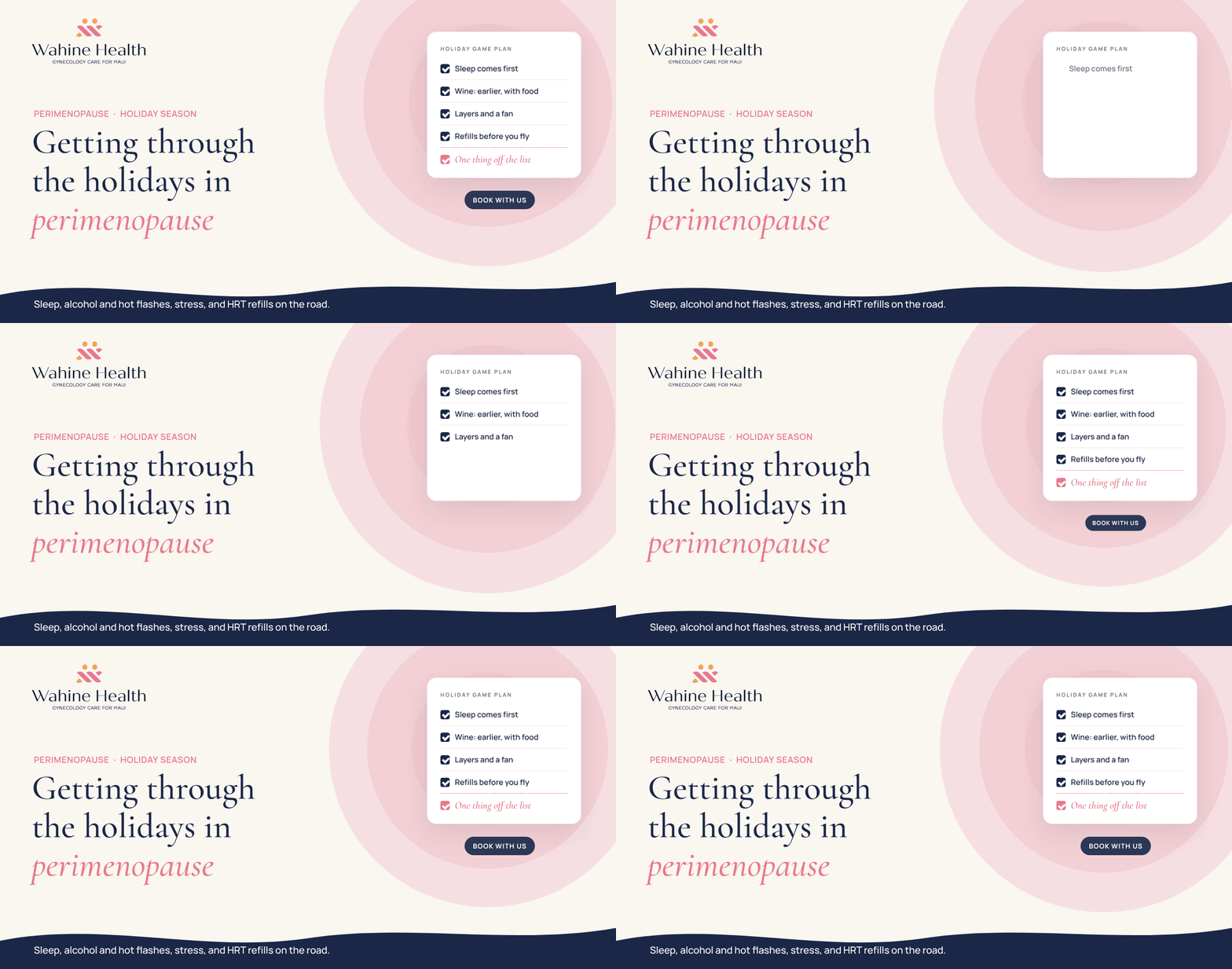
The holidays ask for exactly the things perimenopause makes harder. Late nights. A glass of wine in a warm, crowded room. Travel across time zones. A longer list, a fuller house, and a schedule that is no longer yours. If the season lands differently than it did at 38, you are not imagining it, and you have not lost your holiday spirit.
What has changed is your margin. The hormone shifts of perimenopause and menopause leave less room for heat, for short sleep and for stress, and December spends all three at once. The good news is that you do not have to skip anything. A few small moves, made on purpose, protect most of what matters.
Why the season hits harder now
Your brain keeps your body temperature inside a comfort zone. In the menopause transition that zone narrows, so a small rise in temperature that you would never have noticed at 35 can now set off a hot flash. Holiday life is full of small rises: warm rooms, hot drinks, spicy food, alcohol and stress are all common triggers.
Sleep is the other half. Night sweats and 3 a.m. wake-ups already make sleep lighter in these years. Add late parties, travel and a drink or two, and a short night arrives faster and costs more the next day.
The holiday game plan
Six common triggers, and the swap that helps
Alcohol, hot flashes and the 3 a.m. wake-up
Alcohol widens blood vessels, and for many women in perimenopause and menopause it can bring on a hot flash or a night sweat. How much it takes varies. Some women notice it after a single glass, some mainly with red wine, and some not at all.
The effect on sleep is more predictable. A drink helps you fall asleep faster, then breaks up the second half of the night as it wears off. That is the same stretch of the night when perimenopause wake-ups already cluster, so the two stack.
Illustration
The same night, with and without a late drink
No drink
Two drinks, late in the evening
You do not need to give up the toast. These usually help:
- Drink earlier. A glass with dinner is easier on your night than one at 10 p.m.
- Eat first, and have a glass of water between drinks.
- Choose your occasions. Pick the events where a drink matters to you and skip it at the rest.
- Run your own experiment. Note what you drank and how you slept for a week or two. Your pattern is more useful than any rule.
- Check your medications. Alcohol interacts with some sleep and mood medications. Ask us if you are not sure about yours.
Protect your sleep first
If you only protect one thing this season, make it sleep. Hot flashes, mood, appetite and patience all get harder to manage after a short night.
- Keep your wake time steady, within about an hour, even after a late night. A regular wake time anchors your body clock better than a regular bedtime does.
- Keep the bedroom cool. Use a fan, light layers of bedding, and sleepwear you can take off easily. If you are a guest in a heated house on the mainland, ask for a fan. Nobody minds.
- Stop caffeine by early afternoon.
- Get outside in the morning. Daylight and a walk help reset your clock, which matters most after you cross time zones. A trip from Hawaiʻi to the mainland shifts you two to five hours in winter.
- Let one bad night go. Long naps, extra coffee and a nightcap the next evening tend to turn one bad night into three.
Stress is a trigger, not only a feeling
Many women report that stress and anxiety set off their hot flashes. Perimenopause can also shorten your emotional fuse: irritability, anxious feelings and a flat mood are common in the transition, and they are symptoms, not character flaws.
- Eat regular meals with protein. Skipping meals to “save up” for a party tends to leave you shaky, short-tempered and sleeping worse.
- Move every day, even if it is a 20-minute walk between obligations.
- Edit the list. Choose one tradition to drop or hand to someone else this year.
- Slow your breathing in the moment. Slow, deep breaths will not treat hot flashes, but they can take the edge off a stressful minute.
- Know that good treatments exist. Cognitive behavioral therapy has solid evidence for making hot flashes less bothersome, and hormone therapy and non-hormonal prescription options treat them directly.
If low mood, anxiety or anger is new for you or is frightening you, please tell us. It is treatable. If you ever have thoughts of harming yourself, call or text 988 at any hour.
Keeping hormone therapy on track when you travel
The most common holiday problem we see is simple: someone runs out of estradiol or progesterone on day four of a trip, and the hot flashes and broken sleep come back within days. A little planning prevents it.
Before you fly
The hormone therapy travel checklist
- Count your doses now. You want enough for the whole trip plus an extra week.
- Request refills at least a week before you leave, and before our holiday closures. Testosterone and other controlled prescriptions cannot be rushed and are hard to fill away from home.
- Carry it on. Keep every medication in your carry-on bag, in its original labeled container.
- Patches: keep your usual change days and pack a spare. Sweat, hot tubs and saunas can loosen a patch. Do not leave the box in a hot car.
- Gels and creams: apply at about your usual time, by local time. Tell the TSA officer if a medically necessary gel or liquid is larger than 3.4 ounces.
- Pills: take them at about your usual time, by local time. Progesterone can make you sleepy, so keep it at bedtime wherever you are.
- Vaginal estrogen: pack it. Two or three weeks without it is long enough for symptoms to return.
Tap an item to check it off.
If you miss a dose, in most cases you take or apply it when you remember and then return to your normal schedule. Do not double up. If you are unsure what to do for your regimen, message us.
If you run out, do not just stop and wait until you are home. Send us a message through the patient portal or call the office, and we will help you work out the next step.
On long flights, get up and walk every hour or two and drink water. That is good advice for everyone, and it matters a little more if you take estrogen by mouth.
What should not wait until January
Most holiday symptoms are a nuisance, not a danger. A few deserve attention now:
- Any bleeding after menopause, meaning after 12 months with no period. Call us.
- Very heavy bleeding, such as soaking through a pad or tampon every hour for more than two hours. Call us, or go to urgent care if we are closed.
- Chest pain, trouble breathing, or new swelling and pain in one leg. Call 911 or go to the emergency room.
- Hot flashes or sleep loss that is wearing you down. This is not an emergency, but it is also not something to grit your teeth through. It is treatable.
Book with us before the rush
If your symptoms have been building all year, a visit before the holidays is easier to get than one in January, and it gives treatment time to start working. You can see Ann Craddock, APRN, who often has openings within days, or Dr. G. Both see patients in our Wailea office and by telehealth anywhere in Hawaiʻi. Tell us what you need when you book and we will match you with the right visit.
Book with us — Wailea or telehealthNew and current patients welcome.
One more practical note: most insurance deductibles reset on January 1. If you have been meaning to get labs or an annual visit, our year-end checklist explains what is worth doing before then.
Where that leaves you
You do not have to choose between enjoying the season and feeling well. Guard your sleep, be deliberate about alcohol, take one thing off the list, and pack your prescriptions before anything else. And if you are doing all of that and still struggling, that is useful information. It means it is time to talk with us about treatment, not time to try harder.
Common questions
Does alcohol make hot flashes and night sweats worse? For many women, yes. Alcohol widens blood vessels and can set off a hot flash or night sweat, and triggers vary from person to person: some women notice it after one glass, some mainly with red wine, and some not at all. Paying attention to your own pattern for a week or two is the most reliable way to know.
Why do I wake up at 3 a.m. after drinking? Alcohol helps you fall asleep faster, then breaks up sleep in the second half of the night as it wears off. In perimenopause, when early-morning waking is already common, the two effects stack. Drinking earlier in the evening, with food, and having less usually helps.
Can I skip hormone therapy for a week while I travel? It is better not to. Symptoms such as hot flashes and poor sleep can return within days of stopping, often in the middle of a trip. Pack enough for the whole trip plus extra, keep it in your carry-on, and contact your clinician if you run out or miss doses.
How do I fly with hormone patches, gels or pills? Keep all medication in your carry-on in its original labeled container. Stay on your usual schedule: change patches on your normal days, and take daily pills and gels at about your usual time by local time. Tell the TSA officer if you are carrying a medically necessary liquid or gel larger than 3.4 ounces.
Menopause & Hormones · Wailea, Maui
Enjoy the season. Don’t just get through it.
If hot flashes, broken sleep or mood changes are running your holidays, come see us. Visits with Ann Craddock, APRN, and Dr. G, in our Wailea office or by telehealth anywhere in Hawaiʻi.
Book with us How we treat menopause symptoms Take the 3-minute symptom check-in